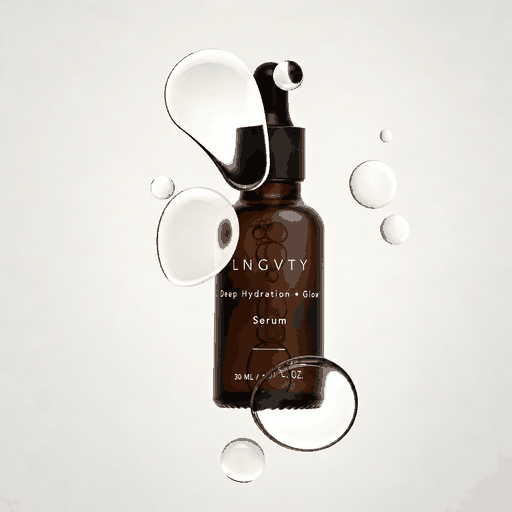
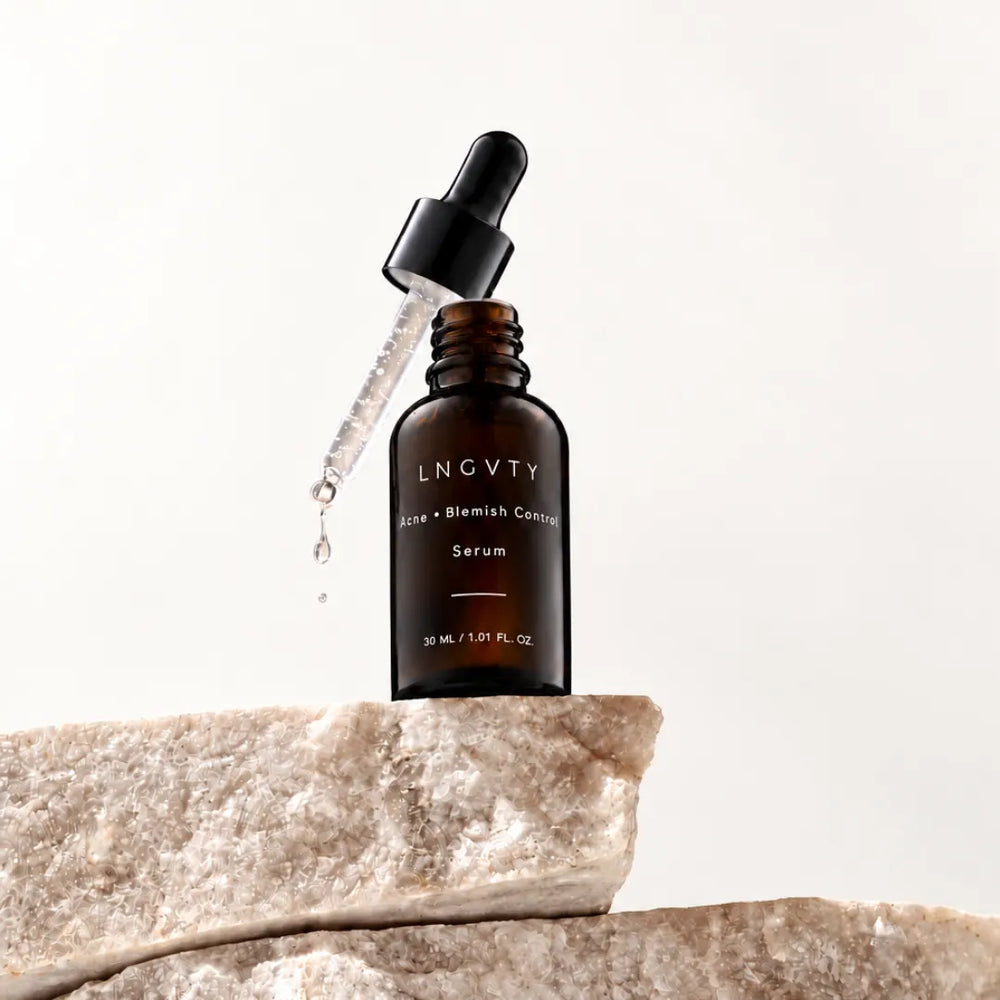
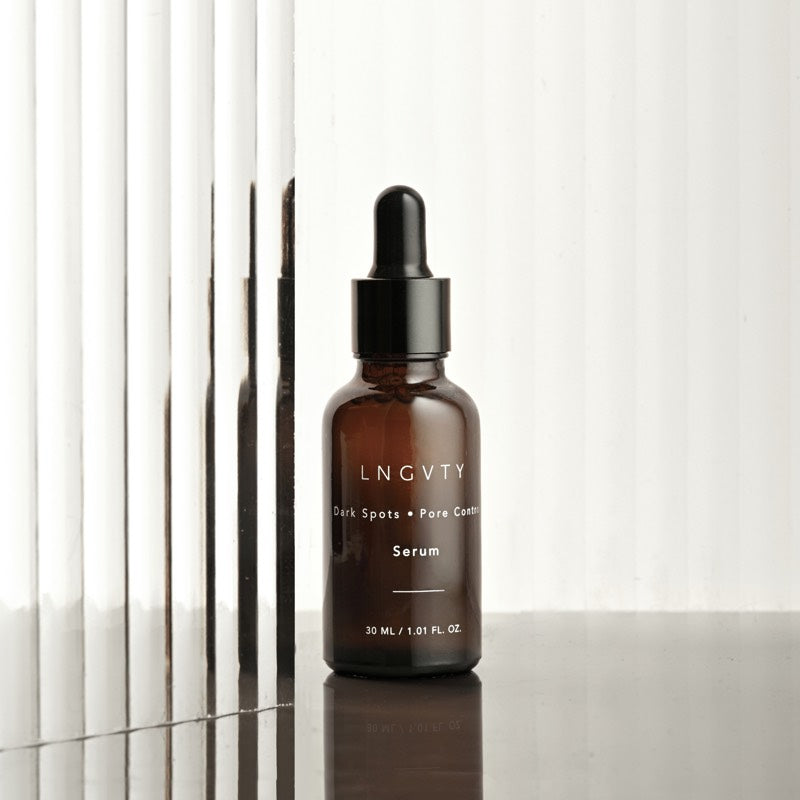
A Korean serum is a lightweight, concentrated treatment for one skin concern. Most Korean serums sold in India draw on K-beauty's ingredient shelf: rice water, snail mucin, centella. LNGVTY draws on Korea's aesthetic clinics instead. Its three serums use human adipose-derived stem cell conditioned media, the growth factors and signalling proteins that tell skin to repair itself, paired with targeted actives for acne, dark spots or dull, dehydrated skin.
Korean Skincare Serums by Skin Concern
-
For Acne & Oily Skin: the Acne, Blemish Control Serum pairs stem cell conditioned media with salicylic acid and glycolic acid to clear pores, niacinamide to control sebum, and centella and green tea to calm inflammation. It is non-comedogenic and light enough for an oily T-zone.
-
For Dark Spots & Pigmentation: the Dark Spots, Pore Control Serum combines kojic acid, which slows melanin production, with niacinamide and sun-safe bio-retinoids to fade dark spots and acne marks and minimise the look of open pores.
-
For Dullness & Deep Hydration: the Deep Hydration, Glow Serum uses a stable vitamin C (3-O-ethyl ascorbic acid), niacinamide and licorice root for glow and more even tone, with betaine and saccharide isomerate to help skin hold water through the day. Glass skin starts here: hydration that holds gives smoother texture, plumper-looking skin and a glow that builds.
-
For Barrier Repair & Calming: all three serums share one base: five ceramides with cholesterol, centella asiatica and six peptides, including copper tripeptide-1. It keeps skin comfortable while the actives work, which matters most for skin that reacts to acids.
Pick the serum for your main concern. If breakouts and the marks they leave are both a problem, start with the Acne, Blemish Control Serum and add the Dark Spots, Pore Control Serum once breakouts settle.
How Korean Stem Cell Serums Work
Korean stem cell serums use conditioned media (CM): the growth factors, signalling proteins and exosomes that stem cells release, rather than live stem cells. These molecules signal skin to repair itself, renew and build collagen.
-
Botanical vs human-derived: most over-the-counter stem cell serums use plant callus culture extracts from apple, grape, rose or tomato. They work as antioxidants but cannot signal to human skin cells. Clinic-grade Korean products use media from human adipose-derived stem cells. LNGVTY uses the human-derived kind, listed on its ingredient labels as Adipocyte Conditioned Media Extract.
-
Paracrine signalling: skin cells coordinate repair by passing proteins to each other. Conditioned media delivers a concentrated set of those messages, which is why it is linked to collagen support, barrier repair and calmer, less inflamed skin.
-
From surgery to skincare: the idea started in reconstructive surgery, where transferred fat appeared to improve the quality of damaged tissue, not just fill it. The effect was traced to signals released by adipose stem cells, and Korean aesthetic clinics began using the cell-free media to help skin recover after procedures.
-
Clinic use vs daily use: in Korean clinics, conditioned media is often applied after microneedling or laser treatments. LNGVTY serums are made for daily use at home, morning and night, and also suit skin after aesthetic procedures once your doctor clears it.
-
Why pair it with actives: acids, kojic acid and vitamin C do the targeted work, while the conditioned media supports repair. Better-tolerated actives are easier to use every day, and consistency is what produces results.
Is Korean Skincare Good for Indian Skin?
Yes, provided the serum is chosen for your concern and suits India's heat and humidity, rather than copying a 10-step routine.
-
Pigmentation needs: Indian skin typically has more melanin, so tanning, acne marks and melasma are common. Serums built mainly for hydration do little for them. Look for actives such as kojic acid, niacinamide and vitamin C, and wear sunscreen daily.
-
Climate and layering: layering several serums in hot, humid weather can clog pores and trigger small bumps. One lightweight serum, a moisturiser and sunscreen is enough.
-
Tested on Indian skin: LNGVTY ran its own CTRI-registered clinical studies in India. In 36 Indian women aged 24 to 44, the Dark Spots, Pore Control Serum lowered melanin by 32.8% versus control. In 32 women with dull, dehydrated skin, the Deep Hydration, Glow Serum raised glow by 35.2% in four weeks. On acne-prone skin aged 18 to 30, the Acne, Blemish Control Serum cut acne lesions by 47.7% in four weeks. Individual results vary.
How to Use a Korean Serum
Most routines need only one serum. Cleanse, apply three to four drops to the face, wait a minute, then follow with moisturiser, and sunscreen every morning. LNGVTY serums can be used morning and night, because the bio-retinoids do not make skin sun-sensitive. The Acne, Blemish Control Serum already contains salicylic and glycolic acid, so avoid adding another exfoliating acid while your skin adjusts. Patch test before first use.
FAQs
Is LNGVTY a Korean brand?
No. LNGVTY is an Indian skin longevity brand. The serums are made in India; the stem cell conditioned media in them comes from Korean clinical aesthetic medicine.
Is a stem cell serum good for your skin?
It depends on the kind. Plant stem cell serums mainly work as antioxidants. Serums with human-derived conditioned media deliver growth factors that support collagen, hydration and barrier repair. LNGVTY serums use the human-derived kind and were clinically tested on Indian skin.
Does a stem cell serum contain stem cells?
No. Stem cell serums contain what stem cells release, not the cells themselves. LNGVTY serums use cell-free conditioned media.
Is conditioned media the same as an exosome serum?
Exosomes are one part of conditioned media. Conditioned media also carries growth factors and other signalling proteins, so it delivers a wider set of signals than exosomes alone.
Is a stem cell or exosome serum safe?
LNGVTY serums contain cell-free conditioned media, with no live cells. The Acne, Blemish Control Serum also contains salicylic and glycolic acid, which can cause mild tingling while skin adjusts. Patch test before first use, and check with a dermatologist if your skin is very reactive.
Can I use a stem cell serum every day?
Yes. LNGVTY serums are made for daily use, morning and night. The bio-retinoids do not make skin sun-sensitive, but wear sunscreen every morning.
Can I use it after laser or microneedling?
Yes. The serums are suited to skin after aesthetic procedures. Start once your dermatologist says the skin can take active ingredients again.
What do Koreans use for pigmentation?
Korean pigmentation care relies on brightening actives such as niacinamide, vitamin C and kojic acid, with daily sunscreen, and Korean clinics add regenerative ingredients after treatments. The Dark Spots, Pore Control Serum combines both: kojic acid and niacinamide with stem cell conditioned media.
Are serums good for oily skin?
Yes, if they are lightweight and water-based. The Acne, Blemish Control Serum is non-comedogenic and uses salicylic acid and niacinamide to control oil.
Can I use two Korean serums together?
You can, but it is rarely needed. Niacinamide is already in all three LNGVTY serums. If you combine two, apply the lighter one first and give each a minute to absorb.
How long until I see results?
The clinical studies measured results at four weeks for acne and glow, and at eight weeks for dark spots. Use the serum daily for at least that long before judging it.